
Freight is Where Margin Goes to Die: Why Load Building Needs More Than a WMS
The article argues that while Warehouse Management Systems (WMS) effectively manage inventory and picking within warehouses, they fall short in optimizing load building for transportation—such as sequencing pallets for multi-stop deliveries, managing temperature zones, and complying with weight limits—which are critical factors impacting on-time delivery, freight costs, and regulatory compliance in food distribution logistics.
Transportation
September 17, 2026
Freight is Where Margin Goes to Die: Why Load Building Needs More Than a WMS

Published By
BFC Insights Team
By the time a load leaves your dock, your WMS has already done its job. It knows what was picked, where it came from, and that it's now"shipped." What it doesn't know — because it was never built to know— is whether that load makes sense.
Did the pallets go on in an order that survives three temperature zones and six stops? Is the trailer within axle-weight limits, or is your driver one scale away from a fine? Does the order on the truck match the order of the stops, or is someone rebuilding pallets at 5 a.m. because the WMS handed off a pick list, not a load plan?
If you're a director of logistics or transportation at a food distributor, you already know the answer. You're not measured on whether inventory moved through the warehouse correctly. You're measured on what happens after it leaves: on-time-in-full delivery, freight cost per case,driver turnover, DOT compliance. And most of the WMS platforms running food distribution warehouses today, however good they are at warehouse execution,stop short of the one decision that determines whether your transportation numbers hit target: how the load itself gets built.
Your WMS manages the warehouse. It doesn't build the truck.
Platforms like Manhattan, Blue Yonder, and Oracle's WMS modules are genuinely good at what they're built for: directing pickers, tracking inventory, managing work inside four walls. That's warehouse management, and it matters.
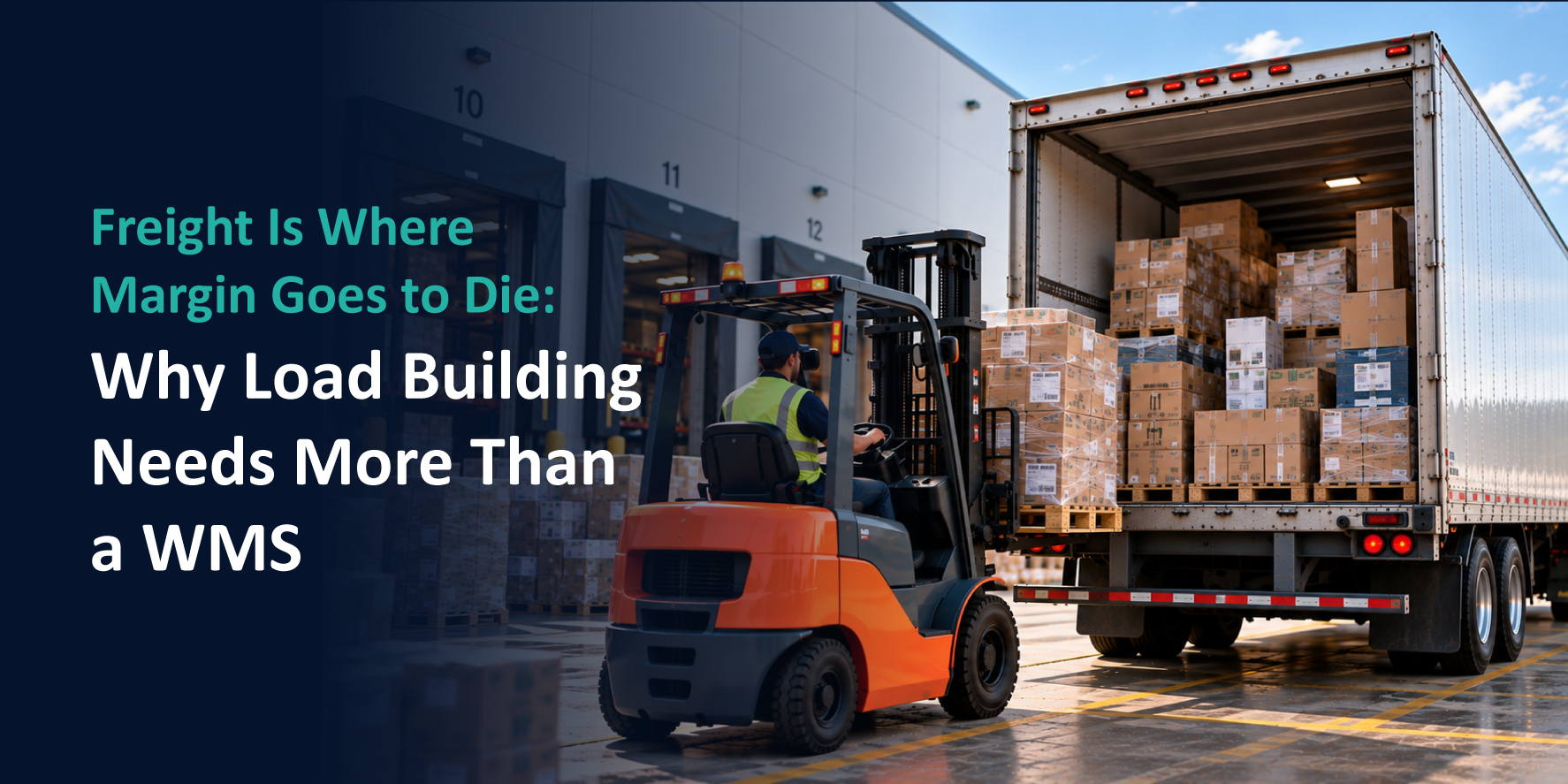
But building a load is a different problem. It means sequencing pallets so the first stop isn't buried under the last, keeping frozen, cooler, and ambient product correctly zoned on the same trailer, balancing weight across axles so the truck is legal at the scale, and doing all of it within cube and weight limits that change by trailer and by route. That's not a warehouse task — it's a transportation-engineering problem, and a general-purpose WMS treats it as an afterthought: a report generated after the fact, not a plan built in advance.
So the gap gets filled by people. Supervisors eyeballing pallet stacks. Dispatchers cross-checking stop sheets against what actually got loaded. Drivers finding out at the drop-off that the load doesn't match the route.
What that gap actually costs
None of this shows up as one dramatic failure. It shows up as a slow leak across every KPI a logistics director owns:
- Compliance risk. An unbalanced load is an axle-weight violation waiting for a scale. Overweight penalties can run into the thousands of dollars per incident depending on the state and the severity of the overage — before you count the cost of an out-of-service truck and a missed delivery window.
- Rework and damage. A pallet built with the wrong stop sequence gets rebuilt by hand, under time pressure, often with product handled twice in the process.
- Missed delivery windows. If the truck isn't loaded in stop order, the first delivery of the day is late because the driver is digging through a trailer that wasn't built for the route.
- Fuel and labor waste. Poorly cubed loads mean more trailers, more miles, and more hours than the freight actually requires.
- Driver turnover. Drivers who spend their mornings untangling a badly built trailer don't stay drivers for long.
Individually, each of these reads as a shift-level annoyance. Add them up across a fleet and a quarter, and it's real money — the kind that never shows up on a P&L line called "load building," because there isn't one. It just shows up as freight cost that's higher than it should be.
Closing the gap without replacing what already works
The fix isn't replacing your WMS. It's adding the one job your WMS was never built to do: building the load. BFC's LoadPlanner and LoadBuilder provide:
- Multi-stop, multi-zone load building that groups product by temperature zone and sequences pallets to match the route, so the truck comes off the dock already organized the way it needs to be delivered.
- Automatic weight balancing that keeps loads within axle limits before the truck ever sees a scale.
- Driver-ready load maps show exactly what's where, so drivers aren't reconstructing the plan from memory.
- Integration with the systems you already run — order and route data flow in from your existing WMS, so nothing about your current stack must change to get it.
Three questions to ask this week
You don't need a full platform evaluation to find out whether this gap is costing you money. Ask your team:
- 1.How many pallets got rebuilt at the dock last week, and why?
- 2.When was the last time a trailer failed a scale for weight distribution — and what did that cost in fines and delay?
- 3.If you pulled ten load sheets at random, how many actually match the stop sequence the driver ran?
If those answers are uncomfortable, the gap isn't hypothetical — it's already on your freight bill. Load building is a transportation problem, and it deserves a transportation-grade solution, not a warehouse system's best guess.
Our recent Blogs
 \
\
Troubleshooting Inefficient Pallet Builds for Frozen and Fresh Food\
\
September 1, 2026
\
\
Troubleshooting Inefficient Pallet Builds for Frozen and Fresh Food\
\
September 1, 2026

 \
\
BFC Software Returns to IFDA Solutions Conference 2026\
\
July 30, 2026
\
\
BFC Software Returns to IFDA Solutions Conference 2026\
\
July 30, 2026
 \
\
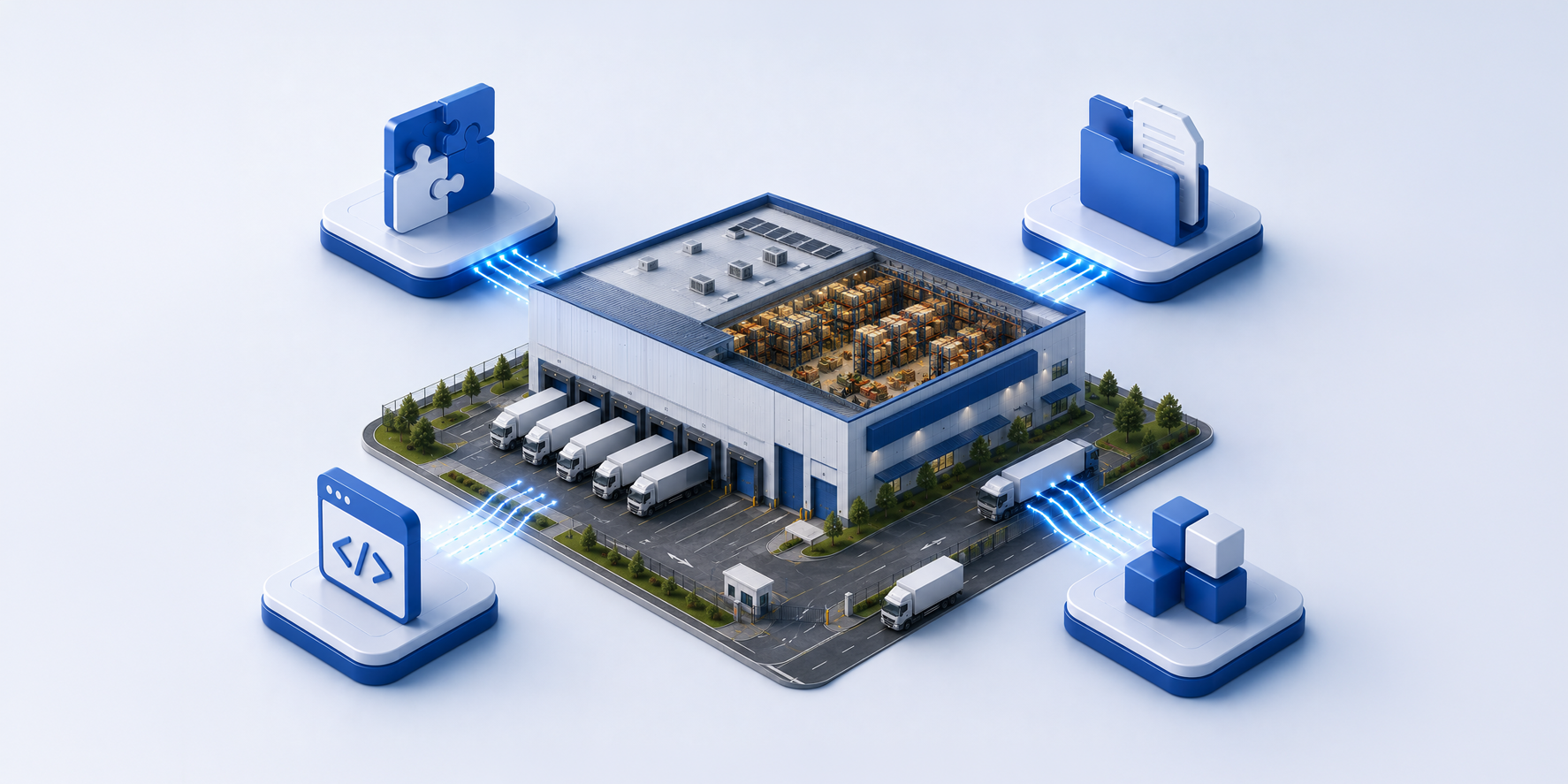
Four Ways to Connect Your ERP to BFC’s Warehouse Management Solution\
\
June 25, 2026
\
\
Four Ways to Connect Your ERP to BFC’s Warehouse Management Solution\
\
June 25, 2026
 \
\
Introducing LoadBuilder™ and LoadPlanner™\
\
June 10, 2026
\
\
Introducing LoadBuilder™ and LoadPlanner™\
\
June 10, 2026
 \
\
Why is WMS Integration So Hard?\
\
May 12, 2026
\
\
Why is WMS Integration So Hard?\
\
May 12, 2026
 \
\
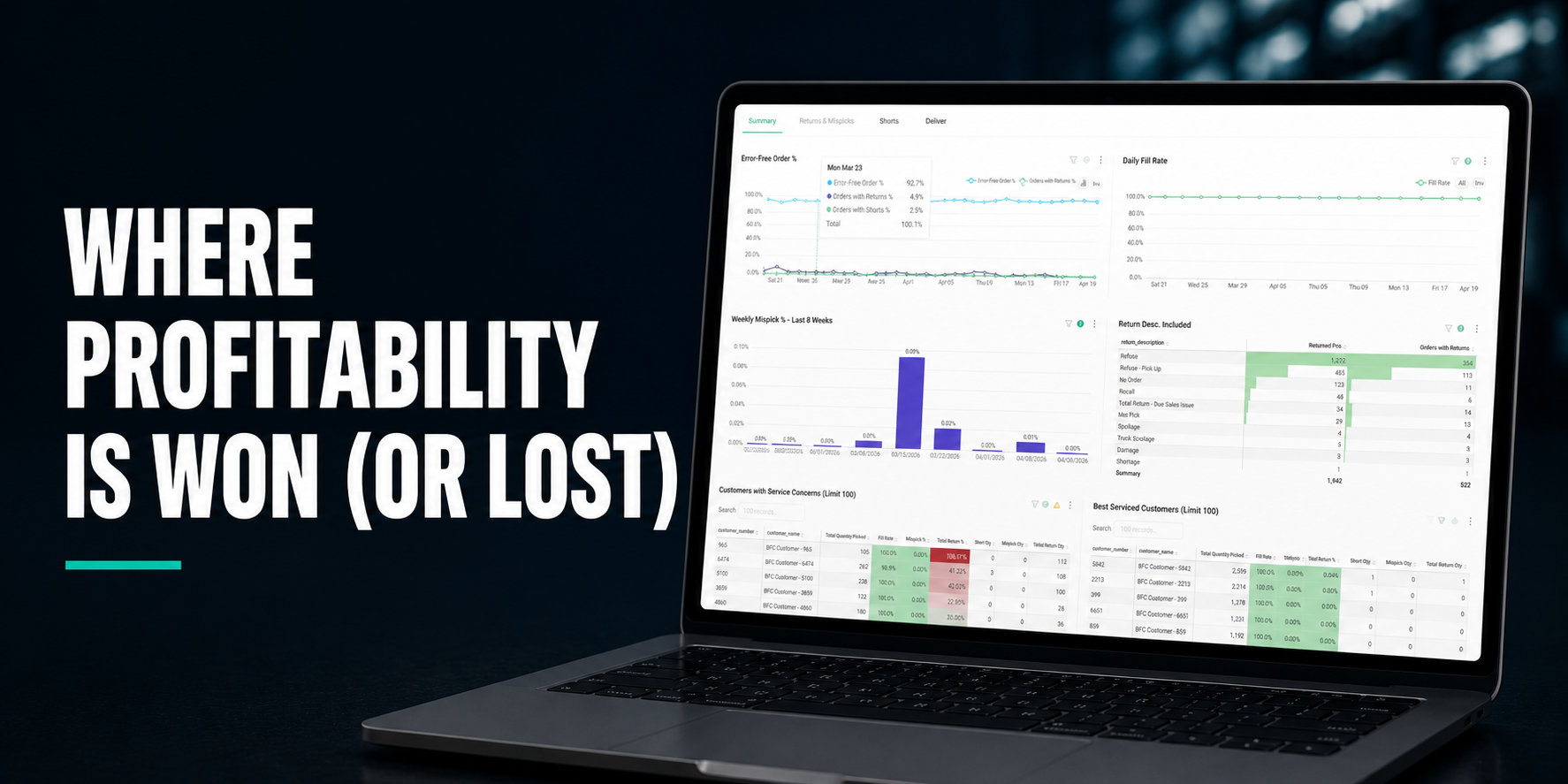
How Analytics is Transforming Profitability in Food Distribution Warehouses\
\
May 4, 2026
\
\
How Analytics is Transforming Profitability in Food Distribution Warehouses\
\
May 4, 2026
 \
\
6 Ways Food Distribution Warehouse Operations are Different\
\
April 21, 2026
\
\
6 Ways Food Distribution Warehouse Operations are Different\
\
April 21, 2026
 \
\
What a WMS Actually Does in Food Distribution (And Why Your ERP Can't Do It) \
\
April 1, 2026
\
\
What a WMS Actually Does in Food Distribution (And Why Your ERP Can't Do It) \
\
April 1, 2026
 \
\
Why Food Distributors Need a Food-Specific WMS (Not Just an ERP)\
\
December 17, 2025
\
\
Why Food Distributors Need a Food-Specific WMS (Not Just an ERP)\
\
December 17, 2025

 \
\
How to Measure Buying Team Performance in Food Distribution\
\
November 25, 2025
\
\
How to Measure Buying Team Performance in Food Distribution\
\
November 25, 2025
 \
\
Turning Efficiency into Profit: A New Playbook for Food Distributors\
\
November 13, 2025
\
\
Turning Efficiency into Profit: A New Playbook for Food Distributors\
\
November 13, 2025

.png)
 \
\
At BFC, We Speak IT and Food Distribution. Here’s How.\
\
May 2, 2024
\
\
At BFC, We Speak IT and Food Distribution. Here’s How.\
\
May 2, 2024
 \
\
3 Essential IT Strategies for Improving Food Distribution Operations\
\
April 19, 2024
\
\
3 Essential IT Strategies for Improving Food Distribution Operations\
\
April 19, 2024

 \
\
How BFC Empowers Executives to Drive Company Success\
\
April 19, 2024
\
\
How BFC Empowers Executives to Drive Company Success\
\
April 19, 2024
 \
\
Warehouse Managers, Is Your WMS Future-Proofing Your Food Distribution Business?\
\
May 2, 2024
\
\
Warehouse Managers, Is Your WMS Future-Proofing Your Food Distribution Business?\
\
May 2, 2024
\
\
The Invisible Bottlenecks- How Hidden Warehouse Challenges Are Costing You \
\
April 16, 2024
 \
\
BFC Attracts Strategic Investment from M33 Growth\
\
September 7, 2023
\
\
BFC Attracts Strategic Investment from M33 Growth\
\
September 7, 2023
 \
\
24/7/365: Why BFC Offers Round-the-Clock Support\
\
February 9, 2024
\
\
24/7/365: Why BFC Offers Round-the-Clock Support\
\
February 9, 2024
 \
\
The BFC Advantage: How Our Customers Outperform\
\
February 6, 2024
\
\
The BFC Advantage: How Our Customers Outperform\
\
February 6, 2024
