
Why Food Distributors Need a Food-Specific WMS (Not Just an ERP)
The article explains that food distributors face unique challenges like perishability, variable units, and strict traceability that general ERP and WMS systems cannot adequately handle, making food-specific warehouse management systems essential for operational precision, compliance, and efficiency in managing complex food distribution demands.
Why BFC
December 17, 2025
Why Food Distributors Need a Food-Specific WMS (Not Just an ERP)


Published By
Jeffrey Vocell
Running a food distribution business means managing constant complexity. Perishables. Spiky demand. Holidays that strain labor and logistics. Margins that never seem to widen.
Add in the pressure to deliver on time while protecting profitability, and one thing becomes clear: what worked five years ago isn’t enough today.
That raises an important question. If your challenges are specialized, shouldn’t your technology be built for them?
Why “General” Systems Fall Short
Most distributors start with an ERP or a general-purpose WMS. These systems are dependable for accounting, purchasing, and baseline inventory control. But once food-specific requirements enter the picture, their limitations show up quickly.
Food isn’t just another SKU.
It expires. It carries catchweights. It breaks down into variable units of measure. It moves in lots. It requires traceability that is operationally precise.
This is where general systems struggle.
ERPs are designed to summarize data for financial clarity. That strength becomes a weakness when you need granular, lot-level visibility, variable weights, or partial-case adjustments without creating reconciliation issues.
Generic WMS platforms focus on movement and location. They lack the contextual logic needed to prioritize by expiration, enforce rotation standards, or support food safety and process compliance at the warehouse floor level.
The result is familiar. Teams manage exceptions in spreadsheets or offline tools, slowing operations and eroding confidence in the data.
This is exactly why food-specific systems exist.
What Food-Specific Technology Actually Enables
Food-specific platforms like BFC’s Dakota WMS and Replenishment Optimizer are designed around how food really moves.
That means:
- Catchweights and lot tracking are captured automatically. Catchweight specifically is captured at receiving and selection.
- Purchasing replenishment logic aligns to sellable inventory and freshness, not just stock levels.
- Visibility extends from the dock to the delivery route so no one’s guessing what’s available, where it is, or how long it will last.
- Cloud-based architecture ensures data is accessible anywhere, anytime.
What the Best Are Doing and Why It Matters
The top distributors we work with share a similar mindset: stop forcing generic tools to do food-specific work.
They’ve invested in technology that mirrors their operations, and the impact is measurable:
- Higher service levels. Less mispicks, fewer shorts, tighter deliveries.
- Reduced waste. Expiration and rotation visibility cut spoilage.
- Greater efficiency. Teams spend less time reconciling and more time executing.
This isn’t about chasing technology for technology’s sake it’s about giving your team systems that actually fit how they work.
Why This Matters Now
Accurate data has become the foundation for better decision-making, performance measurement, and operational control.
But accuracy only helps if the data is usable. That means it has to be accessible, timely, and trusted.
Systems that rely heavily on manual entry or siloed processes limit visibility and create gaps between teams and functions. In an environment where margins are tight and service expectations are high, those gaps lead to slower and less informed decisions, more exceptions, and unnecessary operational friction.
Final Thought
Food distribution is hard enough without fighting your software.
Food-specific systems don’t replace your ERP; they complement it—like burgers and fries, peanut butter and jelly, or (my personal favorite) chicken and waffles. Strong on their own. Better together.
Because when your technology truly understands food, you get the visibility, accuracy, and agility needed to run a stronger, more profitable business.

What Good Looks Like in Food Distribution
See how food distributors use purpose-built technology to scale smarter.
Our recent Blogs

 \
\
BFC Software Returns to IFDA Solutions Conference 2026\
\
July 30, 2026
\
\
BFC Software Returns to IFDA Solutions Conference 2026\
\
July 30, 2026
 \
\
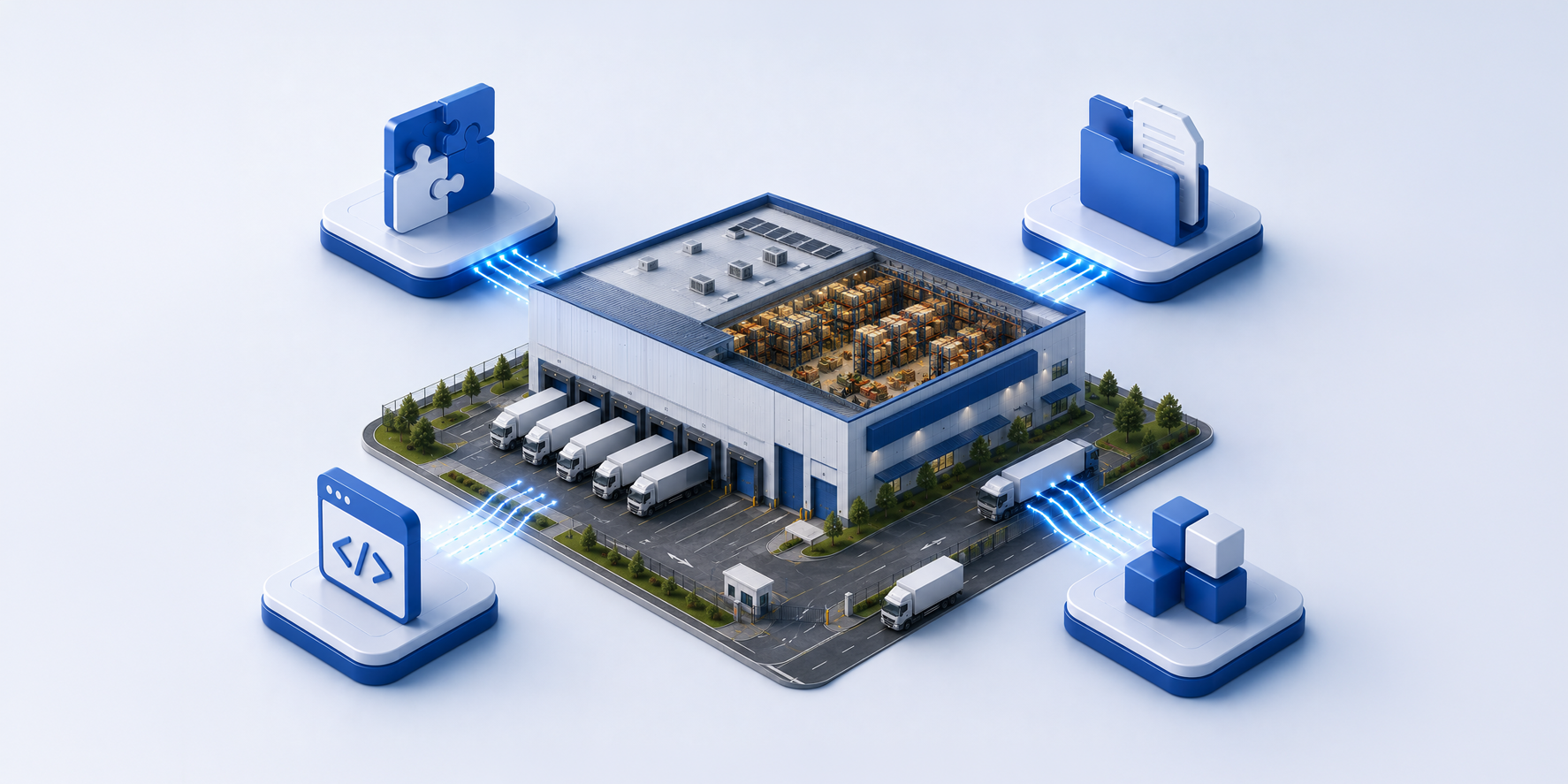
Four Ways to Connect Your ERP to BFC’s Warehouse Management Solution\
\
June 25, 2026
\
\
Four Ways to Connect Your ERP to BFC’s Warehouse Management Solution\
\
June 25, 2026
 \
\
Introducing LoadBuilder™ and LoadPlanner™\
\
June 10, 2026
\
\
Introducing LoadBuilder™ and LoadPlanner™\
\
June 10, 2026
 \
\
Why is WMS Integration So Hard?\
\
May 12, 2026
\
\
Why is WMS Integration So Hard?\
\
May 12, 2026
 \
\
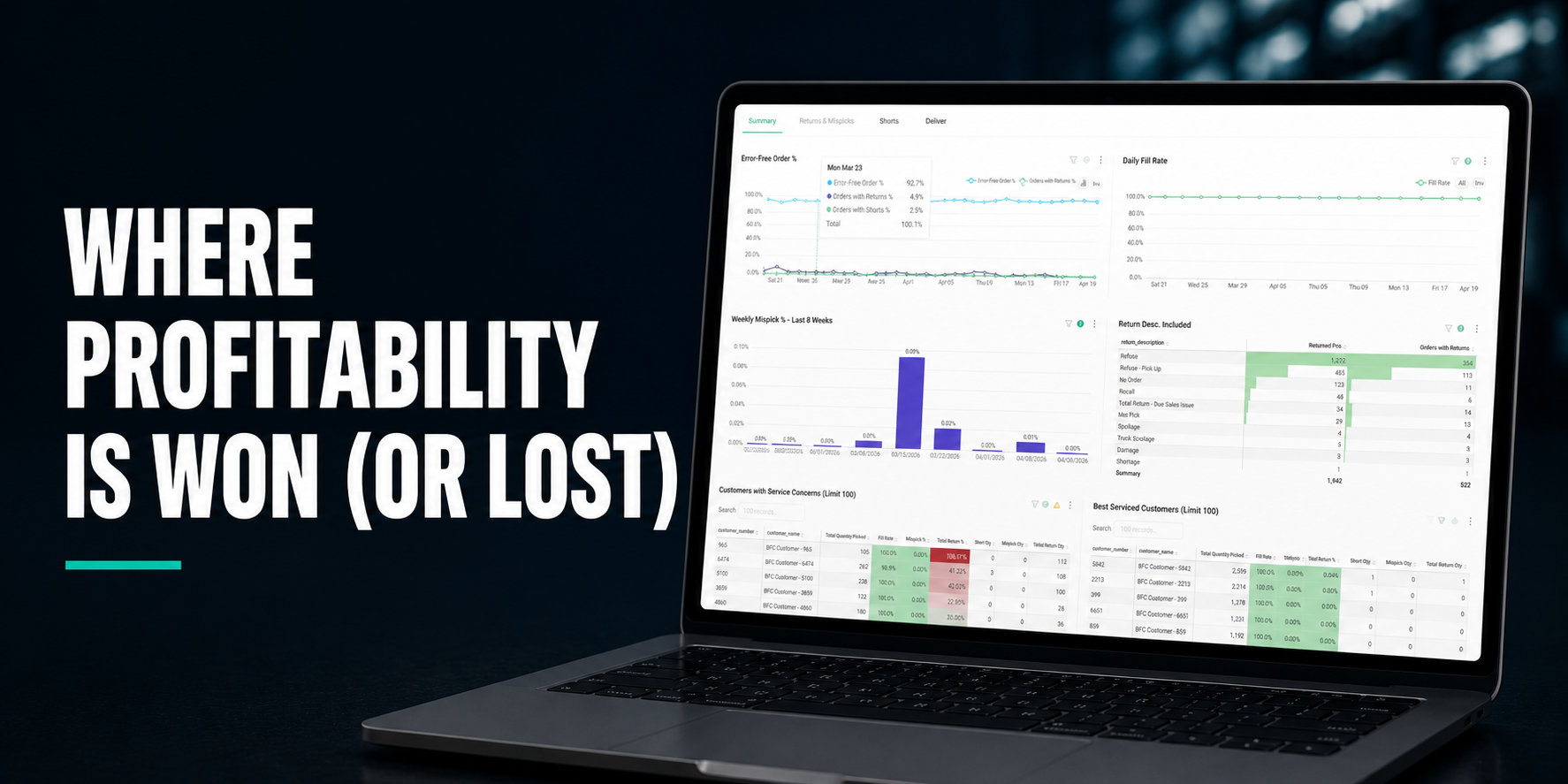
How Analytics is Transforming Profitability in Food Distribution Warehouses\
\
May 4, 2026
\
\
How Analytics is Transforming Profitability in Food Distribution Warehouses\
\
May 4, 2026
 \
\
6 Ways Food Distribution Warehouse Operations are Different\
\
April 21, 2026
\
\
6 Ways Food Distribution Warehouse Operations are Different\
\
April 21, 2026
 \
\
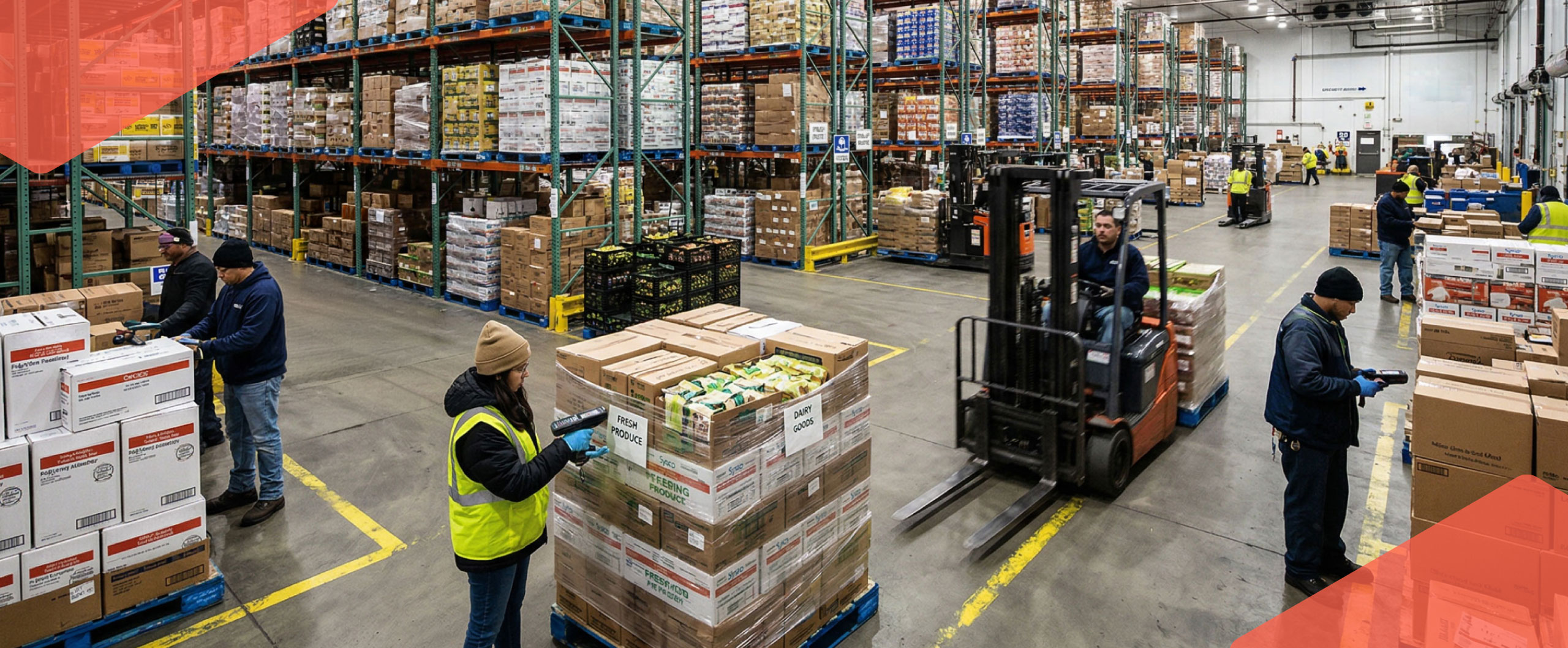
What a WMS Actually Does in Food Distribution (And Why Your ERP Can't Do It) \
\
April 1, 2026
\
\
What a WMS Actually Does in Food Distribution (And Why Your ERP Can't Do It) \
\
April 1, 2026

 \
\
How to Measure Buying Team Performance in Food Distribution\
\
November 25, 2025
\
\
How to Measure Buying Team Performance in Food Distribution\
\
November 25, 2025
 \
\
Turning Efficiency into Profit: A New Playbook for Food Distributors\
\
November 13, 2025
\
\
Turning Efficiency into Profit: A New Playbook for Food Distributors\
\
November 13, 2025

.png)
 \
\
At BFC, We Speak IT and Food Distribution. Here’s How.\
\
May 2, 2024
\
\
At BFC, We Speak IT and Food Distribution. Here’s How.\
\
May 2, 2024
 \
\
3 Essential IT Strategies for Improving Food Distribution Operations\
\
April 19, 2024
\
\
3 Essential IT Strategies for Improving Food Distribution Operations\
\
April 19, 2024

 \
\
How BFC Empowers Executives to Drive Company Success\
\
April 19, 2024
\
\
How BFC Empowers Executives to Drive Company Success\
\
April 19, 2024
 \
\
Warehouse Managers, Is Your WMS Future-Proofing Your Food Distribution Business?\
\
May 2, 2024
\
\
Warehouse Managers, Is Your WMS Future-Proofing Your Food Distribution Business?\
\
May 2, 2024
\
\
The Invisible Bottlenecks- How Hidden Warehouse Challenges Are Costing You \
\
April 16, 2024
 \
\
BFC Attracts Strategic Investment from M33 Growth\
\
September 7, 2023
\
\
BFC Attracts Strategic Investment from M33 Growth\
\
September 7, 2023
 \
\
24/7/365: Why BFC Offers Round-the-Clock Support\
\
February 9, 2024
\
\
24/7/365: Why BFC Offers Round-the-Clock Support\
\
February 9, 2024
 \
\
The BFC Advantage: How Our Customers Outperform\
\
February 6, 2024
\
\
The BFC Advantage: How Our Customers Outperform\
\
February 6, 2024
